
quercus
- 19 Posts
- 5 Comments
Joined 2 years ago
Cake day: December 21st, 2023
You are not logged in. If you use a Fediverse account that is able to follow users, you can follow this user.


 4·2 months ago
For wildlife gardens with native plants, leaving the stems is best practice if not in a fire prone area. From the National Wildlife Federation:
Leave seed heads and flower stalks. Like fallen leaves, the stems and seed heads of perennials can be essential habitat for insects—especially some overwintering native bees—long after flowers have faded, says Mizejewski. Come spring, “cut the stems down to 10 or 12 inches, and native bees will nest inside.” If you prune back shrubs such as forsythia or blackberry, whose stems have hollow or pithy cores, bundle those on your property for more bee nesting sites, says Cane. Mizejewski points to an added bonus of saving seed heads until spring: “They will attract goldfinches, chickadees and other songbirds you can enjoy watching all winter.”
There is nothing that stands out to me as unmaintained, only not maintained in the way people are used to. During spring cleanup and throughout the growing season, invasive species can be removed (and many tend to stick out in the winter as well).

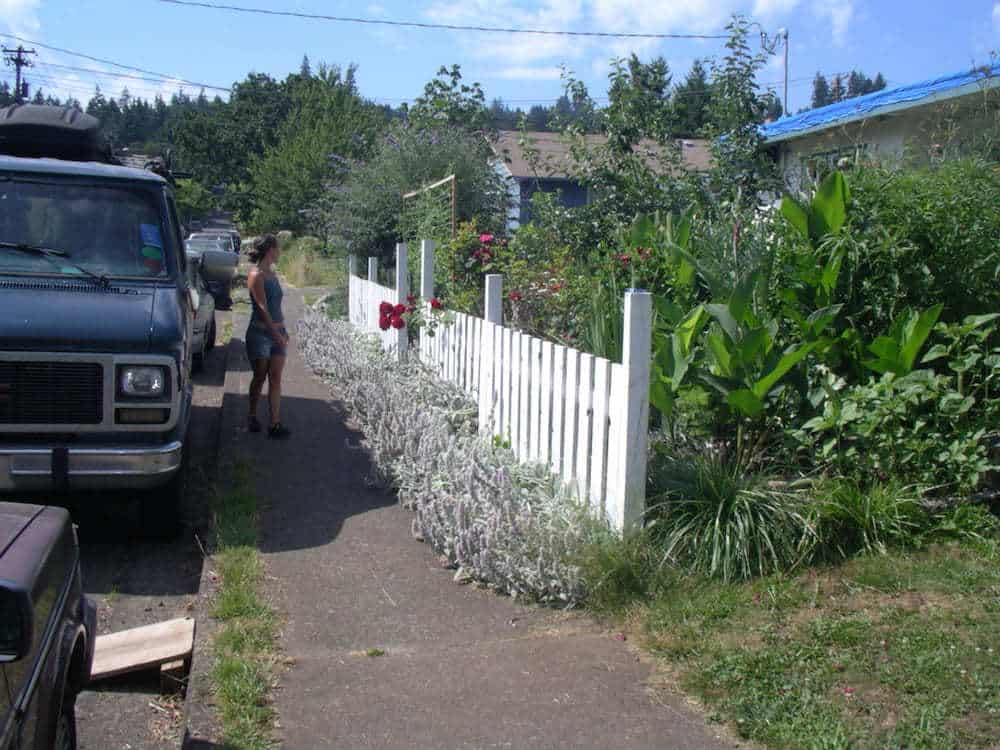


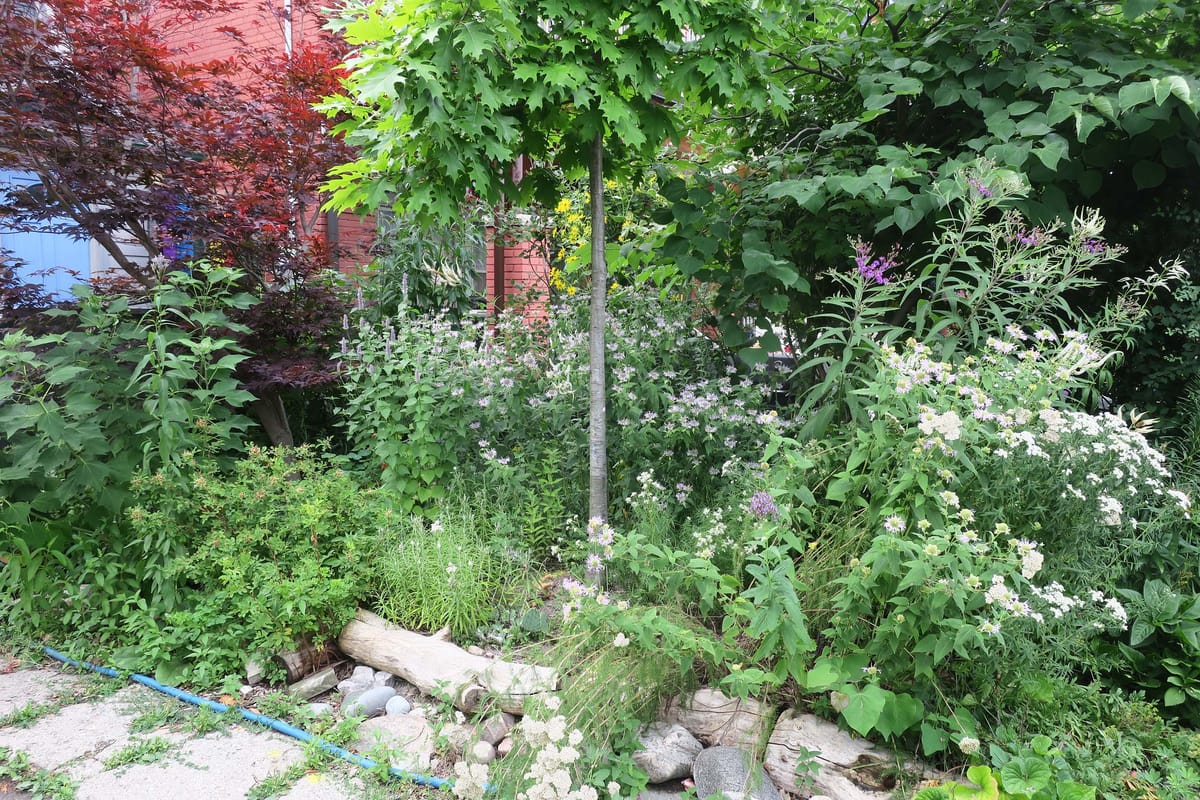
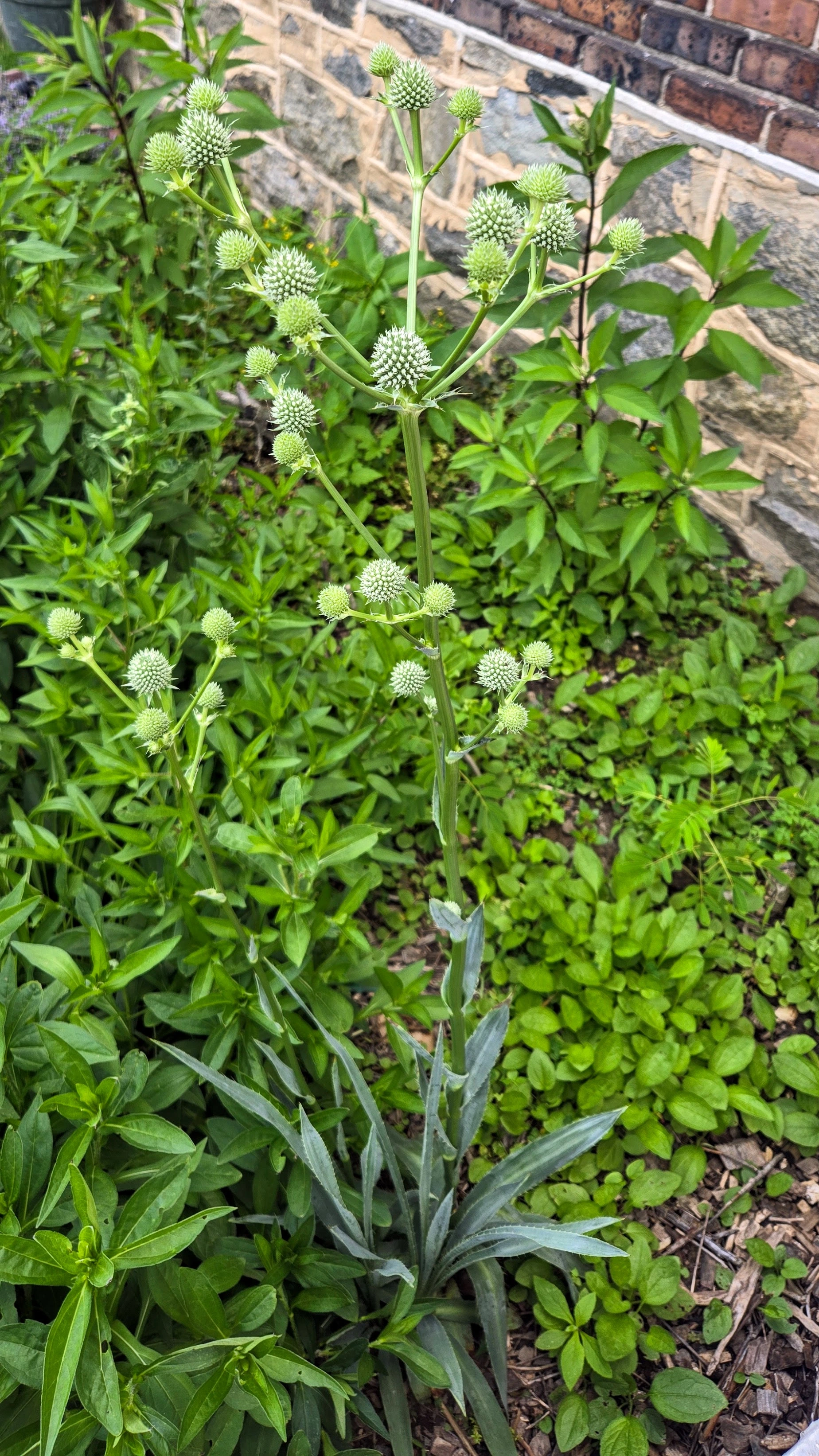
Most of the flowers are divisions of plants, some volunteers and others I got as plugs in summer 2022. I decided to start small and expand over time. The coneflower was four plants last spring which I divided into 12, then into about 30 this spring. Rose milkweed and late boneset are just as prolific.
I have spread some seeds around and others have blown in. The groundcover in the second photo is all volunteer.
The mulch was leftover from a chipdrop. I used it to make the beds look “intentional” when everything was sparse and muddy back in February :) The plan is for everything to grow so dense that I won’t need to mulch it again.
Watching them flutter around the milkweed, over to my neighbor’s flowers, across the street and back again was beautiful. It was amazing to see one in person. They’re much larger than I imagined and very graceful.
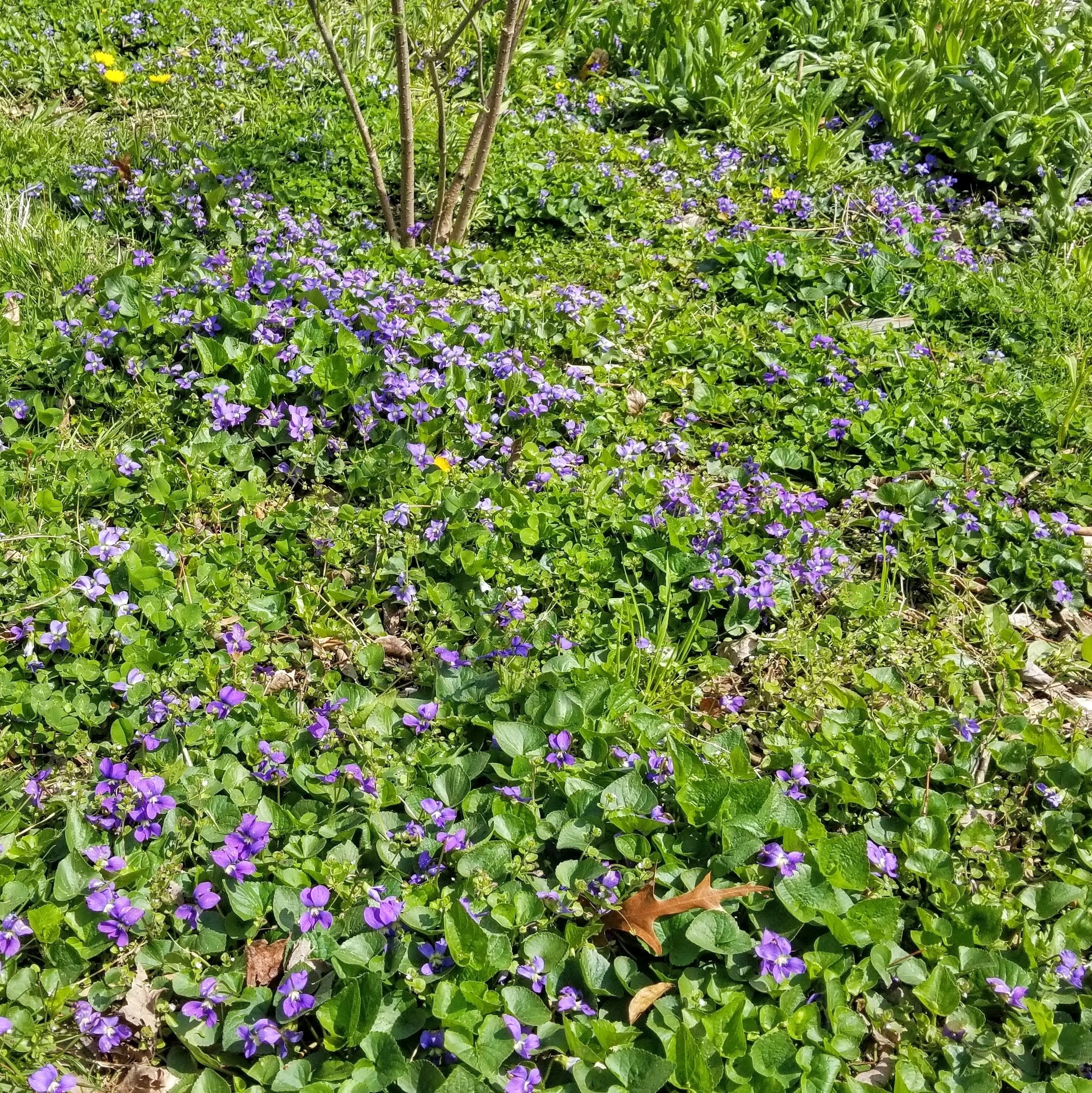
I never took care of the lawn other than mowing it, so much of this stuff was already here in small amounts. Two years ago, I started dividing up the violets and planting them into the grass. They launch seeds up to 4 feet so they quickly spread, clump and bully the grass. Ants move the seeds around too. Last year, I started dividing and transplanting the nimblewill. Panicled aster and late boneset volunteered which pushed out some more.
There’s still plenty of grass closer to my neighbor who treats their lawn. Some I buried in woodchips, the rest I’d like to shade out with edibles and dig out for another rain garden.


Nice! It took me a couple tries too, but I got one soon after a big storm uprooted a bunch of trees.